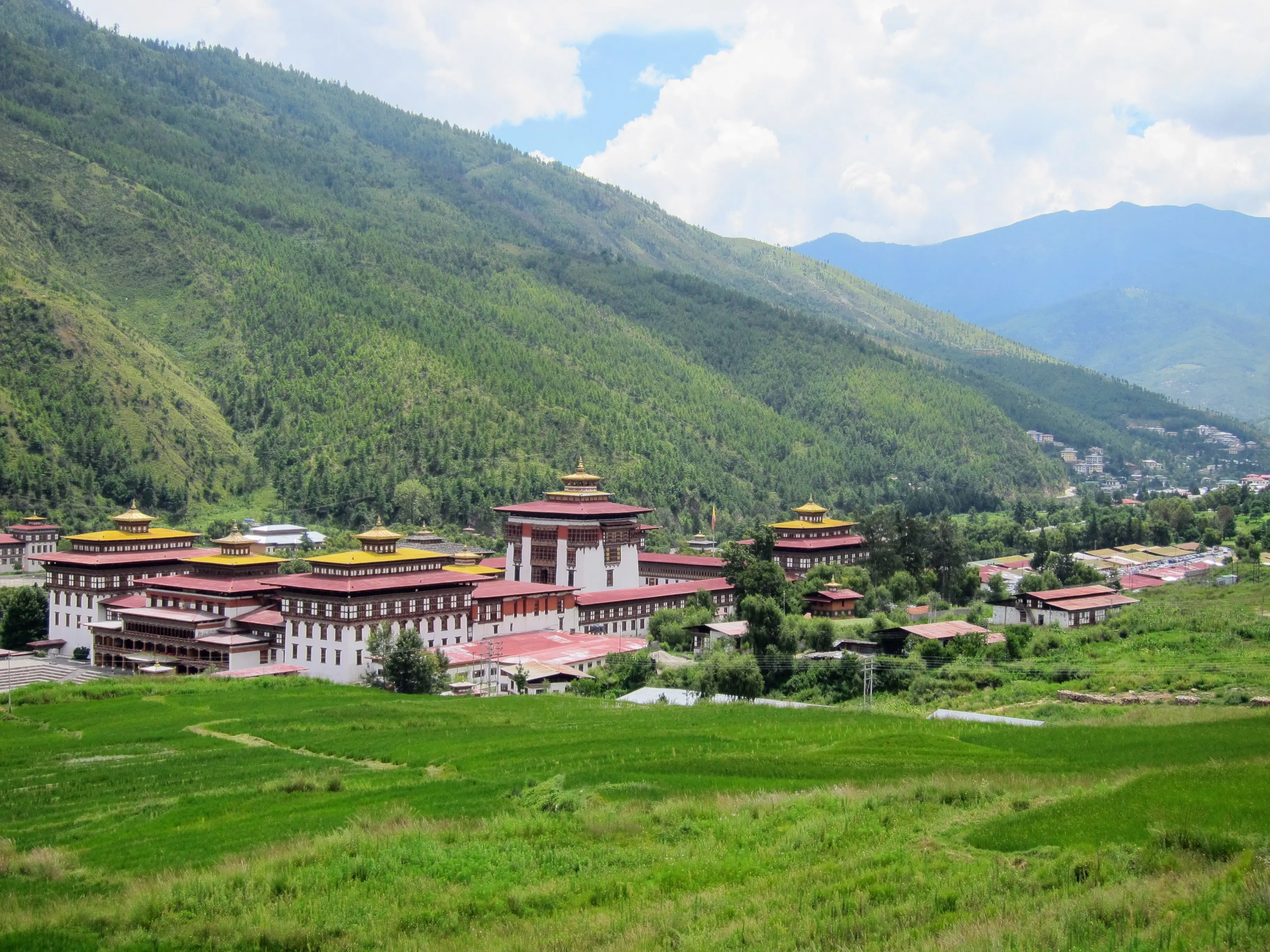
Bhutan town by town · western Bhutan, 2,321 m
Thimphu weather
Thimphu, Bhutan’s capital at 2,321 m, has four genuine seasons. Winter days are mild and sunny with hard-freezing nights; November to February is close to rainless. Summer is warm and wet, with July the wettest month. Snow reaches the valley floor only a handful of times most winters.
- elevation
- 2,321 m
- warmest day · August
- 27°
- coldest night · January
- −2°
- rain per year
- 609 mm
The valley
What Thimphu is actually like
Thimphu is where most visitors spend their first or second night in Bhutan, and its weather sets the expectation for the whole trip — usually a misleading one, because the capital sits high enough to be markedly cooler than the valleys an hour’s drive away.
The defining feature is the gap between day and night rather than between seasons. A January afternoon in the sun is comfortable in a jacket; the same night falls below freezing. That swing narrows in summer but never closes, which is why packing for Thimphu means layers in every month of the year.
Month by month
Thimphu weather, month by month
Daily high °C Nightly low °C Rainfall mm
| Month | High °C | Low °C | Rain mm | Rain days |
|---|---|---|---|---|
| January | 14.8 | -2.2 | 6 | 1.1 |
| February | 16.6 | 0.3 | 9 | 1.2 |
| March | 19.3 | 3.8 | 20 | 3.8 |
| April | 22.4 | 7.9 | 30 | 6.2 |
| May | 24.8 | 11.6 | 50 | 8.7 |
| June | 26.7 | 15.3 | 98 | 14.2 |
| July | 27 | 16.5 | 153 | 19 |
| August | 27.3 | 16.1 | 121 | 16.7 |
| September | 26 | 14.6 | 74 | 11.7 |
| October | 23.7 | 9 | 43 | 4.7 |
| November | 19.7 | 3.2 | 1 | 0.3 |
| December | 16.6 | -0.8 | 4 | 0.7 |
Station climate normals for Thimphu from the NCHM Climate Data Book of Bhutan 2018 (1996–2018 station normals). Rain-day counts are not published for every station — see sources & method. The wettest month here is July, at 153 mm.
Read the table as two stories. The temperature columns move gently — the difference between the warmest and coldest months is smaller than most visitors expect from a Himalayan capital. The rainfall column does the real work: it is almost flat from November to February, then climbs steeply through June and peaks in July before falling away through September.
That rain arrives mostly late in the day. Monsoon mornings in the western valleys are frequently usable, so a wet month on paper is not a washed-out itinerary — see the monsoon page for what that means on the ground.
When to come
The best time to visit Thimphu
October and November give the clearest air of the year over the capital, and the driest. March to May is warmer and greener but hazier, with the big mountain views becoming a morning lottery rather than a given.
Winter is quietly excellent here if you accept the nights: bright days, empty dzong courtyards, and the sharpest Himalayan visibility. Tradition holds that Thimphu’s first proper snowfall of the winter earns the capital a spontaneous holiday — a much-loved custom rather than a standing rule.
Live conditions for Thimphu and the other five towns are on the Bhutan forecast page, updated hourly. For the country-wide comparison see best time to visit Bhutan, or read Does it snow in Bhutan?.
Found your season? Plan the trip.
Little Bhutan is a locally owned operator that builds your itinerary around the weather — guide, permits, government fees and hotels included.
Plan Your Trip Read the Bhutan travel guide
Trips arranged by Little Bhutan · locally owned & operated