Bhutan town by town · western Bhutan, 2,266 m
Paro weather
Paro sits at 2,266 m in western Bhutan and holds the country’s only international airport. Its weather closely tracks Thimphu’s, with a notably dry winter — January averages under one day of rain. Because approaches are flown by eye, cloud and visibility, not rain totals, decide whether flights run to schedule.
- elevation
- 2,266 m
- warmest day · July
- 25°
- coldest night · January
- −1°
- rain per year
- 631 mm
The valley
What Paro is actually like
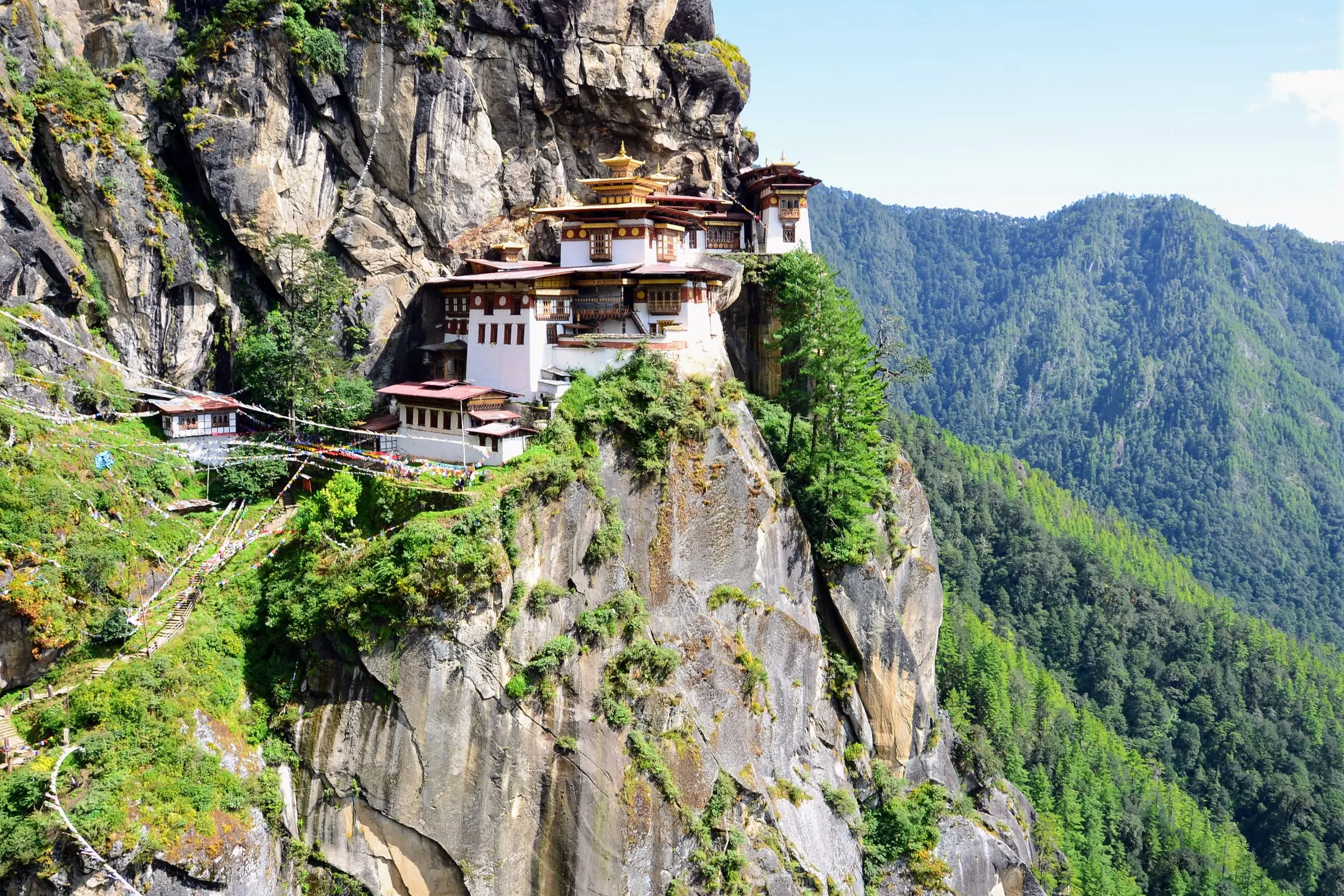
Paro is the valley almost every visitor sees first, because it is where the plane lands. It is a little lower than Thimphu, wide-floored and heavily farmed, and it holds both the airport and the Tiger’s Nest.
The airport is the reason Paro’s weather matters more than any other town’s. Approaches here are flown by eye in daylight, so cloud and visibility — not rain totals — decide whether an aircraft arrives on schedule. That mechanism, and why morning departures are the reliable ones, is set out in full on the flights page.
Month by month
Paro weather, month by month
Daily high °C Nightly low °C Rainfall mm
| Month | High °C | Low °C | Rain mm | Rain days |
|---|---|---|---|---|
| January | 13.2 | -0.9 | 7 | 0.7 |
| February | 15 | 1.3 | 13 | 2.1 |
| March | 17.9 | 4.3 | 22 | 3.7 |
| April | 20.6 | 7.8 | 34 | 6.4 |
| May | 22.7 | 11.2 | 59 | 9.7 |
| June | 24.6 | 14.5 | 81 | 12.5 |
| July | 25 | 16.1 | 161 | 18.5 |
| August | 24.9 | 15.7 | 113 | 17.4 |
| September | 23.3 | 14.2 | 88 | 13.3 |
| October | 20.7 | 9.3 | 49 | 4.3 |
| November | 16.9 | 4.7 | 2 | 0.2 |
| December | 14.6 | 0.5 | 3 | 0.5 |
Station climate normals for Paro from the NCHM Climate Data Book of Bhutan 2018 (1996–2018 station normals). Rain-day counts are not published for every station — see sources & method. The wettest month here is July, at 161 mm.
The pattern matches Thimphu’s: dry, bright winters with freezing nights, a steep monsoon rise from June, and a rapid clearing through late September. What stands out is the winter rain-day count — January averages 0.7 wet days, the lowest of the three stations for which the Climate Data Book publishes one.
One number the table cannot give you is the Tiger’s Nest itself. The hike tops out several hundred metres above the valley floor, so expect it to run roughly 5 °C colder than the figures here, with a real chance of snow underfoot in midwinter. That is an elevation estimate from the lapse rate rather than a measured station value.
When to come
The best time to visit Paro
Autumn is the safest window for a tight flight connection and the clearest for mountain views. Spring brings the valley’s heaviest visitor demand, with Paro Tshechu the single busiest week of the Bhutanese year.
If you travel in the monsoon, build slack around the Paro flight rather than around the roads: an afternoon of low cloud is more likely to move your day than the rain itself.
Live conditions for Paro and the other five towns are on the Bhutan forecast page, updated hourly. For the country-wide comparison see best time to visit Bhutan, or read Paro flights & weather.
Found your season? Plan the trip.
Little Bhutan is a locally owned operator that builds your itinerary around the weather — guide, permits, government fees and hotels included.
Plan Your Trip Read the Bhutan travel guide
Trips arranged by Little Bhutan · locally owned & operated