Bhutan month by month
Bhutan in January
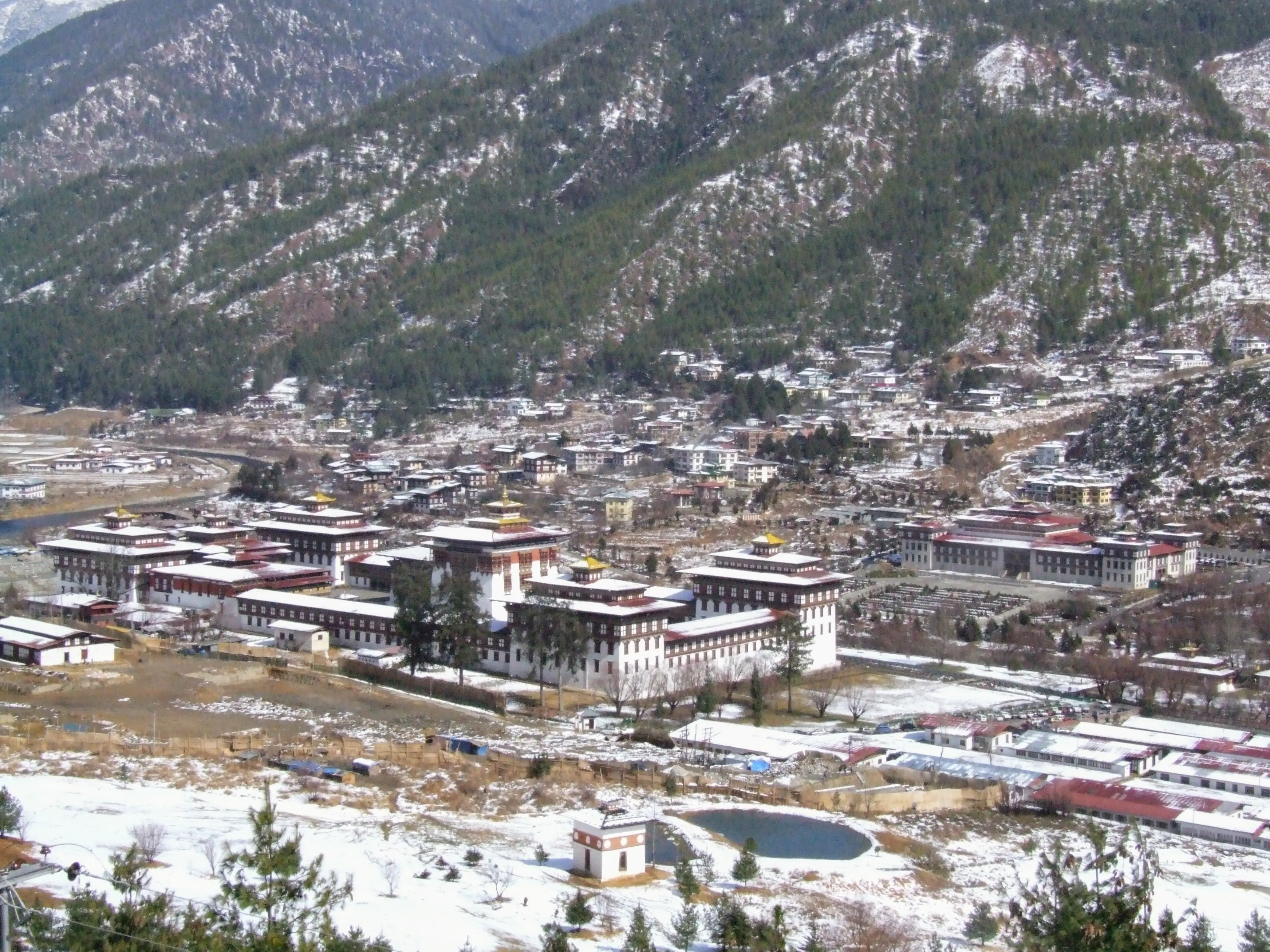
Bhutan in January is the coldest, clearest and quietest month of the year. Thimphu averages 14.8 °C by day and −2.2 °C at night, with roughly 6 mm of rain. Punakha, a thousand metres lower, stays frost-free. Expect empty dzong courtyards, cranes in Phobjikha and frequent snow above 3,000 m.
- Thimphu day / night
- 15° / −2°
- rain over the month (Thimphu)
- 6 mm
- rain days on average
- 1.1
- Punakha daily high
- 19°
January is Bhutan at its clearest and quietest: bright, dry valley days, freezing nights, and some of the sharpest Himalayan views of the year. It is the depth of winter, but not the write-off many visitors assume — the main valleys sit low enough that afternoons are genuinely pleasant, and you will have dzong courtyards nearly to yourself.
Weather
January weather, valley by valley
Daily high °C Nightly low °C Rainfall mm
Where January sits in Thimphu’s year — the reference station. The full six-town numbers:
| Town | Elevation | High °C | Low °C | Rain mm | Rain days |
|---|---|---|---|---|---|
| Thimphu | 2,321 m | 14.8 | -2.2 | 6 | 1.1 |
| Paro | 2,266 m | 13.2 | -0.9 | 7 | 0.7 |
| Punakha | 1,242 m | 18.8 | 5.8 | 14 | — |
| Phobjikha | 2,900 m | 9.4 | -3.5 | 4 | — |
| Bumthang | 2,587 m | 11.4 | -3.9 | 6 | 0.8 |
| Phuentsholing | 293 m | 23.9 | 13.4 | 17 | — |
Station climate normals from the NCHM Climate Data Book of Bhutan, 2018 (1996–2017/18). Rain-day counts are not published for every station.
The pattern across the table is the same everywhere: a big swing between mild, sunny days and hard-freezing nights, with almost no rain. Thimphu and Paro afternoons are cool-jacket weather; Bumthang and Phobjikha have the coldest nights of the six towns and wake to heavy frost. The exception is Punakha — roughly 1,000 m lower than Thimphu, its normals show no frost at all, which is exactly why winter itineraries pair the two valleys.
Snow reaches the valley floors only a few times a winter, but falls frequently above about 3,000 m — the Dochula and Chele La passes can close for a few days after a heavy fall, so build a little slack into cross-country drives. Tradition holds that Thimphu’s first proper snowfall earns the capital a spontaneous holiday — a beloved custom rather than a standing rule.
Crowds & costs
How busy — and how pricey — is January?
Deep low season. Hotels and flights are at their cheapest and easiest to book, guides are readily available, and popular sights are quiet. The Sustainable Development Fee does not change — it is flat year-round — so the saving is purely on hotels, flights and availability, not the fee.
Festivals
Festivals in January
- No major tshechus fall in January. The nearest are the Punakha Drubchen and Punakha Tshechu in late February — worth shaping a winter trip around if festivals matter to you.
⚠️ Tshechu dates follow the lunar calendar and shift every year — only the Black-Necked Crane Festival (11 Nov) and Dochula Druk Wangyel (13 Dec) are fixed. Confirm final dates on bhutan.travel before you book.
What to do
What January is for
This is prime crane season: the black-necked cranes that winter in the Phobjikha valley are widely reported at their peak numbers in December and January, and a frosty morning in the valley watching them feed is one of Bhutan’s great winter experiences. Tradition says the birds circle Gangtey Monastery on arrival and departure.
January is also the classic month for the Gasa hot springs (tshachu) by the Mo Chhu — Bhutanese tradition attaches the waters’ potency to the winter lunar months, and thousands of Bhutanese make the soak an annual ritual. Views are the other draw: from Dochula Pass, the Oct–Feb clear-sky window is at its most reliable, with Gangkhar Puensum (7,570 m) on the horizon. High treks are closed, but low-altitude winter routes such as the Samtengang and Punakha winter treks stay walkable, as do the lower sections of the Trans-Bhutan Trail.
Packing
What to pack for January
Winter layers built for the diurnal swing: a warm base layer, fleece, and a proper insulated jacket for mornings and evenings, but light enough layers underneath that a sunny 2 pm walk does not cook you. Add a hat, gloves, sunglasses and sunscreen (high-altitude winter sun is strong), and warm sleepwear — rural lodges rely on bukhari wood stoves, so confirm heating when booking farmstays.
The verdict
Should you visit Bhutan in January?
For travellers who want mountains, monasteries and near-guaranteed blue sky without the crowds — and do not mind cold evenings — January is quietly one of the best-value months of the year. Skip it if high-altitude trekking is the point of your trip.
Found your season? Plan the trip.
Little Bhutan is a locally owned operator that builds your itinerary around the weather — guide, permits, government fees and hotels included.
Plan Your Trip Read the Bhutan travel guide
Trips arranged by Little Bhutan · locally owned & operated