Bhutan town by town · west-central Bhutan, roughly 2,800–3,000 m
Phobjikha (Gangtey) weather
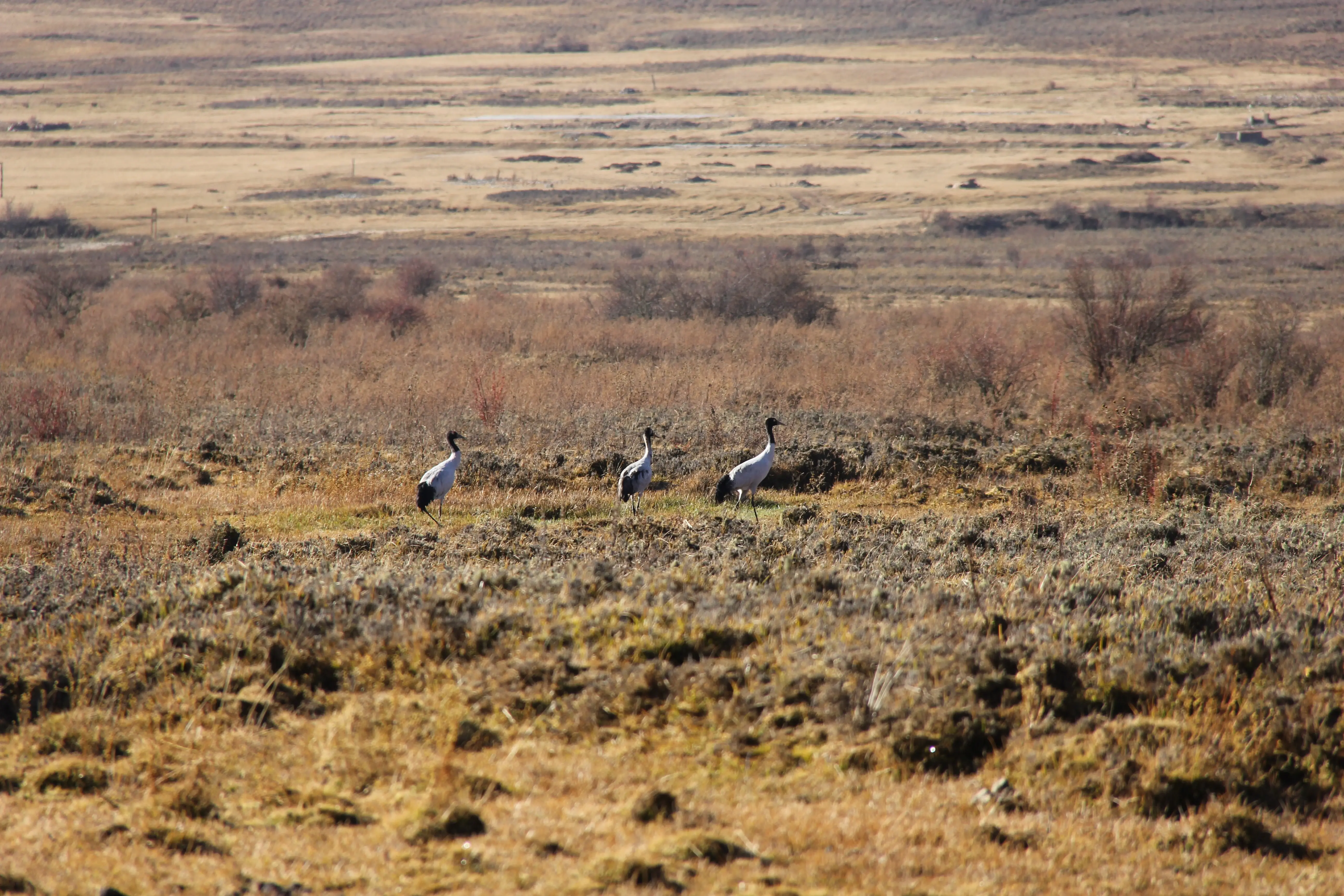
Phobjikha is a high glacial valley in west-central Bhutan whose floor sits around 2,900 m. With Bumthang it is the coldest of Bhutan’s six reference towns, with sub-zero nights from November to February, and it is far wetter in monsoon than the western valleys. Black-necked cranes winter here.
- elevation
- 2,900 m
- warmest day · August
- 20°
- coldest night · December
- −4°
- rain per year
- 2,228 mm
The valley
What Phobjikha (Gangtey) is actually like
Phobjikha — often called Gangtey, after the monastery above it — is a wide, treeless glacial bowl, and it feels nothing like the farmed valleys to the west. There is no single station elevation on record for it: the valley floor spans roughly 2,800 to 3,000 m, and the figures on this page are keyed to about 2,900 m.
Its fame is seasonal. Black-necked cranes arrive from the Tibetan plateau in late October and stay until around mid-February, which puts the valley’s biggest draw squarely inside its coldest months.
Month by month
Phobjikha (Gangtey) weather, month by month
Daily high °C Nightly low °C Rainfall mm
| Month | High °C | Low °C | Rain mm | Rain days |
|---|---|---|---|---|
| January | 9.4 | -3.5 | 4 | — |
| February | 10.8 | -3.3 | 11 | — |
| March | 13.1 | 0.5 | 90 | — |
| April | 15.8 | 2.8 | 189 | — |
| May | 17.6 | 6.9 | 274 | — |
| June | 19.6 | 10 | 268 | — |
| July | 20 | 11.3 | 516 | — |
| August | 20.3 | 11.4 | 530 | — |
| September | 18.9 | 10.3 | 211 | — |
| October | 16.7 | 5.6 | 97 | — |
| November | 13.2 | -0.3 | 37 | — |
| December | 10.6 | -4.1 | 1 | — |
Station climate normals for Phobjikha from the NCHM Climate Data Book of Bhutan 2018 (1996–2018 station normals). Rain-day counts are not published for every station — see sources & method. The wettest month here is August, at 530 mm.
Two things stand out against the western valleys. Nights fall below freezing from November through February — this and Bumthang are where Bhutan’s cold actually lives. And the monsoon is in a different league: July and August together bring more rain than Thimphu records in an entire year, because the terrain here catches monsoon flow the western rain shadows miss.
The valley’s spring rainfall figures are the one part of this station’s record we treat with caution, and we avoid making spring rain claims for Phobjikha beyond what the table shows.
When to come
The best time to visit Phobjikha (Gangtey)
Late October to mid-February is the reason to come, and you should plan for the cold rather than around it: heating in the valley is basic by design, and the nights are the coldest you will meet on a standard itinerary.
The monsoon months are the ones to avoid here specifically. Elsewhere in western Bhutan the rain is an inconvenience; in Phobjikha it is the dominant fact of the month.
Live conditions for Phobjikha and the other five towns are on the Bhutan forecast page, updated hourly. For the country-wide comparison see best time to visit Bhutan, or read Bhutan in November.
Found your season? Plan the trip.
Little Bhutan is a locally owned operator that builds your itinerary around the weather — guide, permits, government fees and hotels included.
Plan Your Trip Read the Bhutan travel guide
Trips arranged by Little Bhutan · locally owned & operated