Bhutan month by month
Bhutan in March
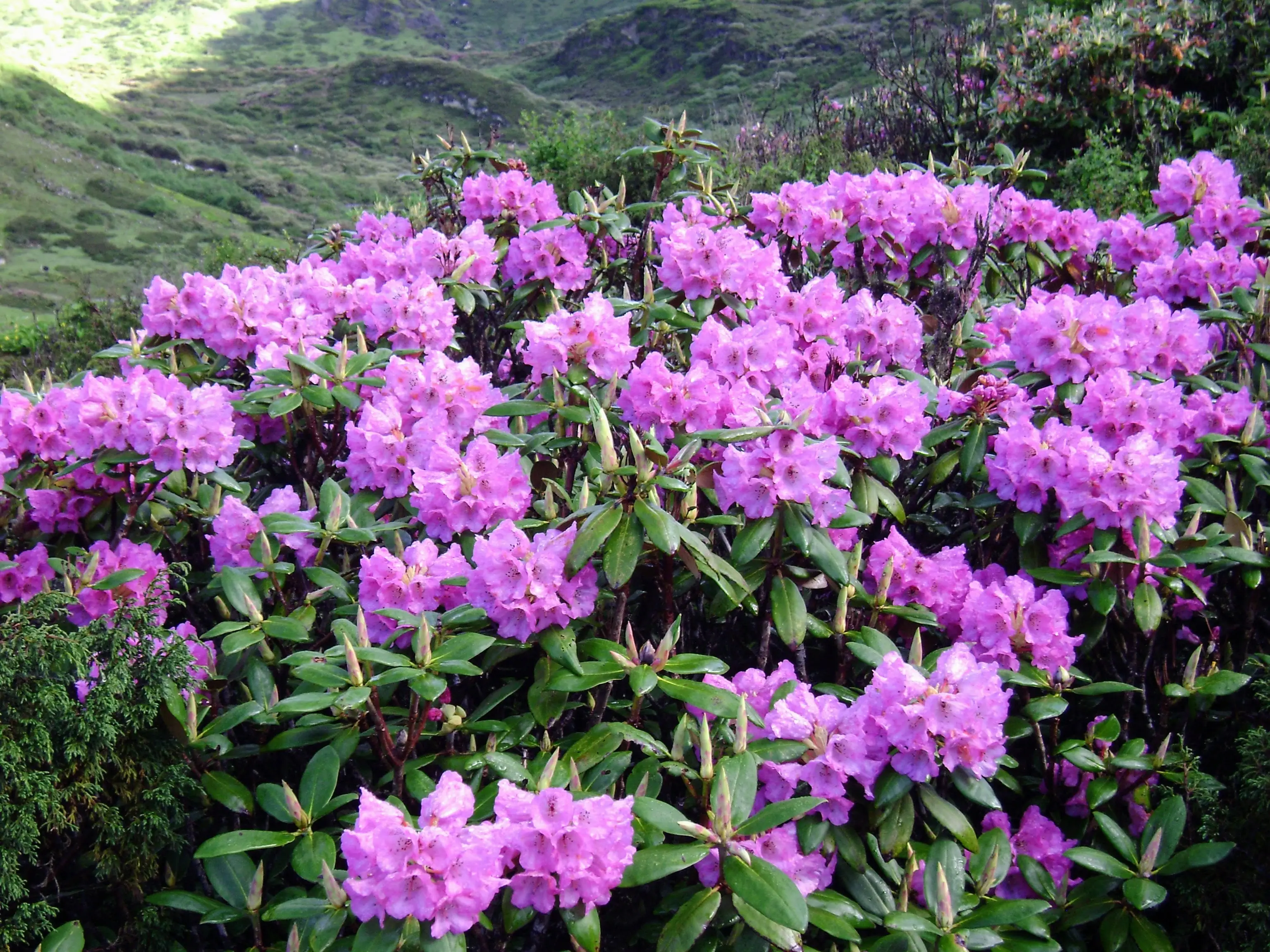
Bhutan in March is spring arriving fast. Thimphu warms to about 19 °C by day, nights climb back above freezing, and the first rhododendrons open from mid-month. Rain returns as occasional showers rather than anything settled. The Paro Tshechu, Bhutan’s most famous festival, begins in the final days.
- Thimphu day / night
- 19° / 4°
- rain over the month (Thimphu)
- 20 mm
- rain days on average
- 3.8
- Punakha daily high
- 24°
March is the turn of the year: valley afternoons warm up fast, the first rhododendrons open from mid-month, and Bhutan’s biggest festival — the Paro Tshechu — begins in the final days. Spring high season starts here, and it builds quickly.
Weather
March weather, valley by valley
Daily high °C Nightly low °C Rainfall mm
Where March sits in Thimphu’s year — the reference station. The full six-town numbers:
| Town | Elevation | High °C | Low °C | Rain mm | Rain days |
|---|---|---|---|---|---|
| Thimphu | 2,321 m | 19.3 | 3.8 | 20 | 3.8 |
| Paro | 2,266 m | 17.9 | 4.3 | 22 | 3.7 |
| Punakha | 1,242 m | 23.9 | 11.2 | 17 | — |
| Phobjikha | 2,900 m | 13.1 | 0.5 | 90 | — |
| Bumthang | 2,587 m | 15.3 | 2.1 | 34 | 6.5 |
| Phuentsholing | 293 m | 29.8 | 18.5 | 80 | — |
Station climate normals from the NCHM Climate Data Book of Bhutan, 2018 (1996–2017/18). Rain-day counts are not published for every station.
Across the table, March is several degrees warmer than February in every valley, nights climb back above freezing in Thimphu and Paro, and the first modest rain returns — a few showery days a month in the west rather than anything monsoon-like. Punakha is properly warm by now; Bumthang and Phobjikha still carry a winter edge at night.
Skies remain mostly clear, though the reliably crystalline Oct–Feb visibility window is closing: haze will build through spring, so if Himalaya panoramas are a priority, earlier in the month is better. High passes are past the worst of their snow-closure risk but a late fall can still briefly shut them.
Crowds & costs
How busy — and how pricey — is March?
The shoulder tips into high season. March itself is comfortable, but the Paro Tshechu at month’s end is the highest-demand event of the Bhutanese year — flights into Paro and hotels in the valley sell out months ahead for festival week. The SDF is flat year-round; it is airfares and rooms that peak. Book early or aim a week or two clear of the festival.
Festivals
Festivals in March
- Paro Tshechu — Rinpung Dzong, 29 March – 2 April 2026: Bhutan’s most famous festival, five days of masked dance culminating in the unfurling of the giant Thongdrol appliqué at dawn on the final day.
- Punakha Tshechu — the tail of the late-February festival can run into 1 March (as in 2026).
⚠️ Tshechu dates follow the lunar calendar and shift every year (2026 dates shown, verified July 2026) — only the Black-Necked Crane Festival (11 Nov) and Dochula Druk Wangyel (13 Dec) are fixed. Confirm final dates on bhutan.travel before you book.
What to do
What March is for
From mid-March the rhododendron season opens — Bhutan has 46 species, and the bloom sweeps upward by elevation through spring, so March’s flowers are in the lower forests with the passes still to come. Spring trekking begins in earnest: the Druk Path window opens (March–May), and trails are dry, cool and quiet before the April rush.
It is also a fine month for the Tiger’s Nest hike — mild, mostly dry, and free of winter ice on the upper trail. Photographers should aim for mornings, clearest year-round and especially before the spring haze thickens.
Packing
What to pack for March
Classic layering territory: t-shirt-to-fleece range in a single day, a light insulated jacket for evenings, and a compact rain shell for the occasional shower. Sturdy shoes if you are hiking; the usual covered shoulders and knees for dzongs and festival grounds.
The verdict
Should you visit Bhutan in March?
A superb month that rewards planning: early March gives you near-winter clarity with spring warmth and few crowds; late March delivers the Paro Tshechu at the price of peak demand. Either way, it comfortably earns its place in Bhutan’s classic season.
Found your season? Plan the trip.
Little Bhutan is a locally owned operator that builds your itinerary around the weather — guide, permits, government fees and hotels included.
Plan Your Trip Read the Bhutan travel guide
Trips arranged by Little Bhutan · locally owned & operated