The calendar, cross-referenced
Festivals & the weather they come with
Bhutan’s tshechu festivals follow the lunar calendar, so their dates shift every year — and the date you land on decides the weather you get. Spring and autumn tshechus fall in the clear, dry windows; a winter one means freezing nights, and a monsoon one means rain. Always reconfirm dates before booking.
⚠️ Tshechu dates follow the lunar calendar and shift every year. Only two events have fixed dates: the Black-Necked Crane Festival (11 November) and the Dochula Druk Wangyel Tshechu (13 December). The dates below were last verified 14 July 2026 — always confirm against the official bhutan.travel calendar before booking flights.
Why cross-reference at all
A festival fixes your dates — the weather comes attached
Most Bhutan trips are planned around a festival, which means the festival quietly chooses your weather for you. That’s worth knowing in advance: Punakha’s big events land in the mildest low-valley window of late winter, Paro’s tshechu owns peak spring, the autumn cluster rides the clearing skies after the monsoon, and the two fixed-date events belong to the crisp, clear end of the year. Here’s the whole calendar with its weather attached.
The festival × weather matrix
| Festival | Venue | 2026 dates | Weather at the time |
|---|---|---|---|
| Punakha Drubchen | Punakha Dzong | 24–26 Feb 2026 | Late winter, but mild — Punakha sits at 1,242 m, with February afternoons around 21 °C. The proof that winter works here. |
| Punakha Tshechu | Punakha Dzong | 27 Feb–1 Mar 2026 (end date varies by source) | As the Drubchen: dry, sunny, mild days in the low valley, cool evenings. |
| Paro Tshechu | Rinpung Dzong, Paro | 29 Mar–2 Apr 2026 (Thongdrol unfurled at dawn on the final day) | Peak spring — mild days, rhododendrons starting, and the highest visitor demand of the year. Book furthest ahead for this one. |
| Thimphu Tshechu | Tashichho Dzong, Thimphu | 21–23 Sep 2026 | The monsoon tail: warm days, skies clearing between showers as the rains retreat. |
| Wangdue Tshechu | Wangdue Phodrang | 19–21 Sep 2026 | Same window as Thimphu — late-monsoon warmth with improving skies. |
| Jakar Tshechu | Jakar Dzong, Bumthang | 18–21 Oct 2026 | Crisp autumn days and clear skies — but cold Bumthang nights at 2,587 m; pack proper layers. |
| Jambay Lhakhang Drup | Jambay Lhakhang, Bumthang | 26–29 Oct 2026 | As Jakar: bright days, near-freezing nights. Famous for its midnight fire ceremony — dress for standing outside in the cold. |
| Black-Necked Crane Festival | Gangtey Monastery, Phobjikha | 11 Nov — fixed date, every year | Late autumn in a high valley (~2,900 m): clear, cold, frost by morning. The cranes have just arrived for the winter. |
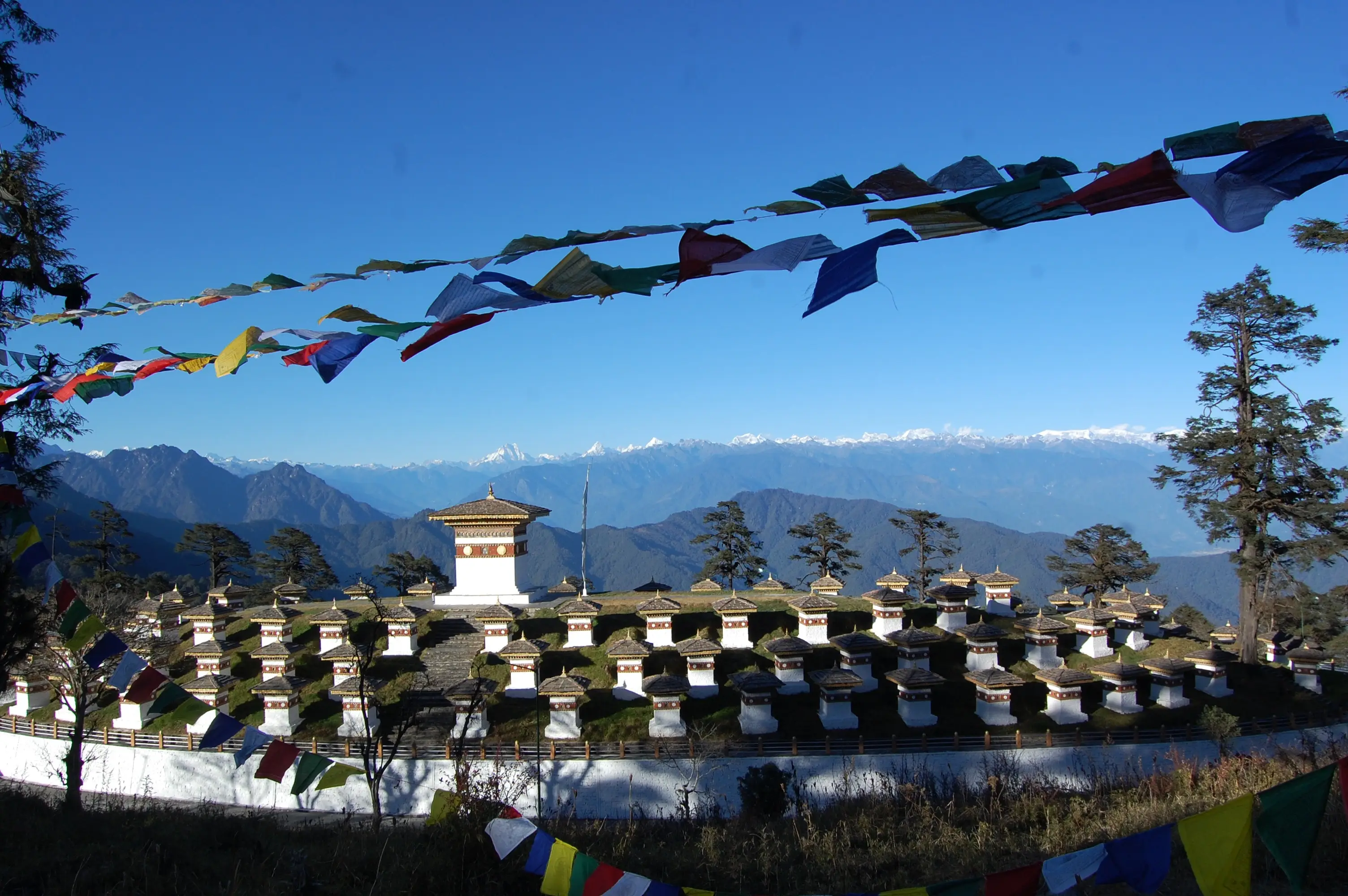
| Dochula Druk Wangyel Tshechu | Dochula Pass (3,100 m) | 13 Dec — fixed date, every year | Winter at altitude: genuinely cold, but timed with the year’s clearest Himalaya panorama as the backdrop. |
Looking for 2027 dates? As of 14 July 2026, operator calendars still conflict on the 2027 lunar dates for the major tshechus — Paro and Thimphu differ by weeks between sources — so we don’t print them as fact. Only the Crane Festival (11 Nov) and Dochula (13 Dec) are safe to pencil in for any year; for the rest, wait for the official calendar on bhutan.travel.
Reading the matrix
Late winter: Punakha’s trump card
Punakha Drubchen and Punakha Tshechu run back-to-back in late February — deliberately held in the one major valley where late winter means shirtsleeve afternoons. At 1,242 m, Punakha records no frost in its climate normals, so you get masked dances in a riverside dzong, clear winter light, and none of the spring crowds. Getting there means crossing Dochula pass, which can close briefly after snow — a morning’s patience, historically, not a trip-wrecker.
Spring: Paro Tshechu, the heavyweight
Paro Tshechu, straddling late March and early April, is the most in-demand event on the calendar — peak spring weather, rhododendrons climbing the hillsides, and the giant Thongdrol silk image unfurled at dawn on the final day. The weather is the easy part; the flights and hotels are not. This is the one festival to book months ahead.
Autumn: the cluster after the rains
Thimphu and Wangdue hold their tshechus in the third week of September, right on the monsoon’s tail — expect warm days and skies that improve by the hour, with a shower still possible. A month later, Bumthang takes over: Jakar Tshechu and the Jambay Lhakhang Drup in October get the full crisp-and-clear autumn, at the price of near-freezing nights at 2,587 m. The Drup’s famous fire ceremony happens after dark — bring the warm layer you were tempted to leave in the hotel.
Fixed dates: the two you can plan years ahead
The Black-Necked Crane Festival (11 November, Gangtey Monastery) celebrates the birds that winter in the Phobjikha valley, arriving from late October — expect frosty mornings and bright days in a high glacial valley. The Dochula Druk Wangyel Tshechu (13 December) is staged at 3,100 m on the pass itself, in front of 108 chortens — cold, yes, but timed for the October–February window when the Himalaya stand sharpest on the horizon. Both reward serious layers and repay them in full.
For how each festival month feels beyond the festival grounds, the month-by-month guides on the best-time hub carry the detail.
Planning around a festival?
Little Bhutan confirms the final lunar dates, locks the scarce festival-week hotels early, and builds the weather-right itinerary around the event.
Plan Your Trip Read the Bhutan travel guide
Trips arranged by Little Bhutan · locally owned & operated